Dehumanization in No Other Choice
It is just a profound piece of fiction in all ways that will stay with most people. If you are anything like me you immediate thought upon finishing it will be “damn I want to watch that again.”
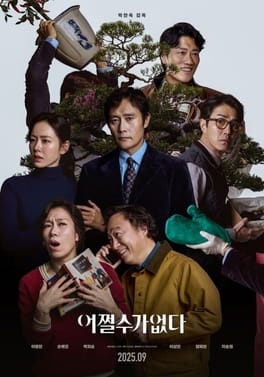
I want to first and foremost say this will not be a spoiler free look at No Other Choice. If you would like to know what that would be like – “it’s amazing go watch it now” is pretty much it. But I wanted to talk more about some of the themes in this movie which is going to require some spoilers. I will do my best to not give everything away, but it might be worth watching the movie before reading this piece.
No Other Choice is a South Korean dark comedy by Park Chan-wook who is probably best known for Old Boy and the rest of The Vengeance Trilogy. He’s had a long storied career. He is bold, willing to push boundaries, and is just all around a great filmmaker. Film nerds love him and are right to do so. I digress. No Other Choice follows Man-su who works for a paper company recently bought out by Americans. He knows that automation is coming and plans to stand strong for his team, only to find out he’s on the chopping block as well.
He takes on menial work while being committed to the idea that he’ll get back to what he was and his family won’t have to sacrifice anything. As time goes on it becomes increasingly clear that is simply not the case. When he is forced to put his childhood home on the market and give away the family pets he becomes desperate.
He meets a man working for a paper company and becomes a little obsessed with his online presence and seemingly perfect life. Man-su starts to believe that if he eliminates the man he can step in and take his place and restore his family’s life. He then of course realizes there might be others in the area who have experienced the same job loss and could also step into this man’s role if something were to happen to him. So he concocts a plan to find out who those men are and make sure they can’t get in his way.
Yes. Exactly how you presume he would be doing this.
What unfolds is a darkly hilarious, yet emotional, ride. Man-su is convinced this is what he must do, that he has no other choice, but also struggles with it. Not only emotionally but just the basic realities of killing someone and getting away with it is not easy. At one point you will be laughing at his ineptitude and the silly situations he gets himself only for you to then feel heartbroken as Man-su clearly identifies with these men and their own struggles with losing their jobs and their family situation.
You are all at once rooting for him, disgusted by his actions, and shocked to find out some less than great things from his past. Meanwhile his wife, Mi-ri, is struggling to keep everything together and challenging just how far she too will have to go to protect their family.
There is a lot happening here. There are so many details I could also get into in regards to the children and the way they are dealing with the fallout, but it’s worth watching and seeing it for yourself. There is also just the themes of how much we give ourselves to our jobs and define ourselves that way, which is especially stark in countries like South Korea. As well as gender roles because there are less than subtle hints that Mi-ri had a career that could have actually helped the family through this.
I will say that unsurprisingly Man-su starts to damage his family in his attempts to “save” them. By the end of the movie everybody is eternally changed and the dark reality of what was done to save their “happy” life is a mark on them as individuals and a unit as a whole.
But one of the things that most struck me about this is the level of dehumanization. Man-su slowly becomes more comfortable with what he is doing and more able to cope with seeing the men he is going after as a job to be completed. This is all done with the backdrop of automation. Man-su started the journey planning to fight against automation and for the jobs of those under him because of their humanity and that being fired can be the end of someone’s life. Only to then be the one taking lives and being more than willing to fall into the very thing he opposed, if only to save himself and his family’s way of life.
It is a powerfully depressing message. Even if Man-su had decided to give up his dreams of working for another paper company how long before the family would have been here anyway? At what point do we push back on the perpetual “cutting of costs” and building more and faster at the cost of our collective humanity?
I have a lot more I could say about both this point and many of the other things this movie is saying, but I really think it should be experienced. It will make you laugh, might make you cry, you’ll be uncomfortable, grossed out, and go through a whole range of emotions, but it’s worth doing so. It is also just a great movie, well acted and impeccably shot. I feel like I am doing it a disservice in not discussing more of the cinematography or how well Park Chan-wook was able to use the actual filming to highlight what the story is saying. It is just a profound piece of fiction in all ways that will stay with most people. If you are anything like me you immediate thought upon finishing it will be “damn I want to watch that again.”
Comments ()